Open Today Sales: 8:30 AM-9 PMOpen Today Service: 7 AM-7 PM
Open Today! Sales: 8:30am-9pmService: 7am-7pm
Maintaining the correct tire pressure is one of the simplest and most effective ways to keep your Nissan performing at its best. Proper inflation affects how your vehicle handles, brakes, and rides — and it directly impacts your safety, fuel efficiency, and tire longevity. For families and commuters in Ontario, CA, staying on top of tire pressure means fewer surprises on the road, whether you’re navigating city streets or heading out on longer drives through Fontana or Rancho Cucamonga.
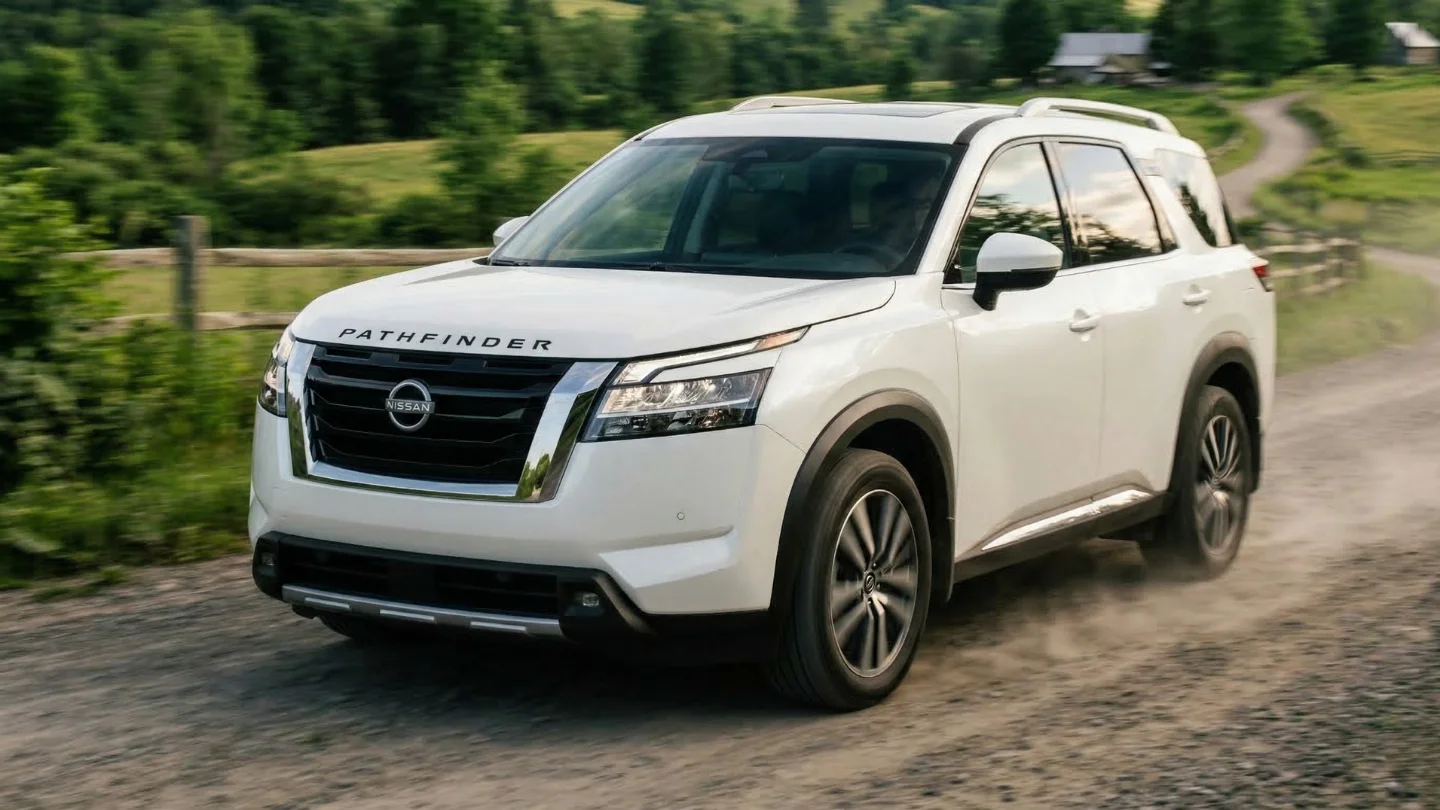
Each Nissan model has specific tire pressure requirements designed to balance performance, durability, and fuel economy. Most Nissan passenger cars require pressures between 32 and 36 PSI, while SUVs and trucks typically call for pressures in the 33 to 35 PSI range. Here is a breakdown for current Nissan models:
| Nissan Model | Recommended PSI |
|---|---|
| Cars | |
| Altima | 32 PSI |
| Sentra | 33 PSI |
| Versa | 33 PSI |
| SUVs & Crossovers | |
| Kicks | 35 PSI |
| Rogue | 33 PSI |
| Murano | 35 PSI |
| Pathfinder | 35 PSI |
| Armada | 35 PSI |
| Trucks | |
| Frontier | 35 PSI |
| Electric | |
| Leaf | 36 PSI front / 34 PSI rear |
These figures are general starting points. Tire pressure can vary depending on tire size, vehicle load, and driving conditions, so always check the tire pressure sticker on the driver’s side door jamb or refer to your owner’s manual for the exact specification for your vehicle’s configuration.
Proper tire inflation preserves tire tread life, improves fuel efficiency, and keeps your vehicle handling safely. Underinflated tires can reduce gas mileage by up to 3%, which adds up quickly for daily commuters across the Inland Empire. Tires with incorrect pressure also wear unevenly, increasing the likelihood of premature replacements. Maintaining the recommended PSI helps distribute wear evenly across the tire surface, extending tire life by as much as 20%.
On the safety side, properly inflated tires improve braking performance and reduce the risk of blowouts. Whether you’re driving through Montclair or commuting along the I-10, correct tire pressure gives you better traction, more responsive handling, and greater confidence behind the wheel.
Temperature swings have a direct impact on tire pressure. For every 10-degree Fahrenheit drop in temperature, tire pressure decreases by approximately 1 to 2 PSI. For Nissan owners in the Ontario area, this means tire pressure can drop noticeably during cooler fall and winter mornings — even without a leak. Conversely, hot summer days can cause pressure to rise, potentially leading to overinflation.
Checking your tire pressure more frequently during seasonal transitions helps you catch these fluctuations before they become a safety concern. A quick morning check before driving gives you the most accurate reading, since tires heat up during use and can produce higher-than-actual numbers.
Reduced fuel economy, uneven tread wear, increased blowout risk, and sluggish handling. Common after cold snaps and temperature drops.
Optimal fuel efficiency, even tread wear, responsive braking, and a smoother ride. Check monthly and before long trips.
Most Nissan models come equipped with a Tire Pressure Monitoring System (TPMS) that alerts you when pressure drops below safe levels. The system uses sensors mounted on each wheel to send real-time pressure data to your vehicle’s onboard computer. When pressure in any tire falls below the manufacturer’s recommended level, a warning light appears on your dashboard.
This early alert helps you address the issue before it leads to uneven wear, reduced fuel economy, or a potential blowout. For drivers navigating the busy roads around San Bernardino or Riverside, staying ahead of tire pressure problems means safer and more confident drives every day.
Checking tire pressure is quick and straightforward with a basic tire pressure gauge. For the most accurate reading, measure when your tires are cold — ideally first thing in the morning before driving. Compare the reading to the recommended PSI on your driver’s side door jamb sticker, and add or release air as needed.
Nissan recommends checking tire pressure at least once a month and before any long trips. If your TPMS warning light illuminates, check each tire’s pressure with a gauge and inflate to the recommended level. After adjusting, the system typically recalibrates automatically after driving at speeds above 50 mph for approximately 10 minutes. If the light remains on, you can manually reset it by turning the ignition to the “on” position without starting the engine, then pressing and holding the TPMS reset button until the indicator blinks three times.
If you need assistance with tire pressure checks, TPMS diagnostics, or any tire maintenance, Empire Nissan’s certified service technicians are ready to help. We provide thorough tire inspections, professional pressure adjustments, and expert advice on tire rotation and replacement to keep your Nissan in top shape.
For more maintenance guides and service advice, visit our Service and Parts Tips library. Looking for savings on your next visit? Check out our latest Service and Parts Specials.
Empire Nissan sits just south of Rancho Cucamonga at 1377 Kettering Dr, Ontario, CA 91761, inside the Ontario Auto Center. Sales, service, parts, and financing all run from that one location, so a test drive and an oil change happen at the same address. Contact Empire Nissan Browse New Nissan Inventory How Do You Get…
The 2027 Nissan Frontier is built around something that has become unusual in the midsize truck class: every single configuration gets the same naturally aspirated 3.8-liter V6, rated at 310 horsepower and 281 lb-ft of torque. There is no four-cylinder base engine and no power penalty for choosing the work-truck grade. Along with the Toyota…
Contáctenos Ver el inventario de Nissan Kicks ¿Cuáles son las principales versiones y características de Nissan Kicks 2027? Nissan Kicks 2027 se ofrece en tres versiones: S, SV y SR. Las tres pueden equiparse con tracción delantera o con el sistema Intelligent AWD. La novedad del año es el paquete Rock Creek, que se monta…