What Is the Driving Range and Battery Capacity of the 2026 Nissan LEAF?
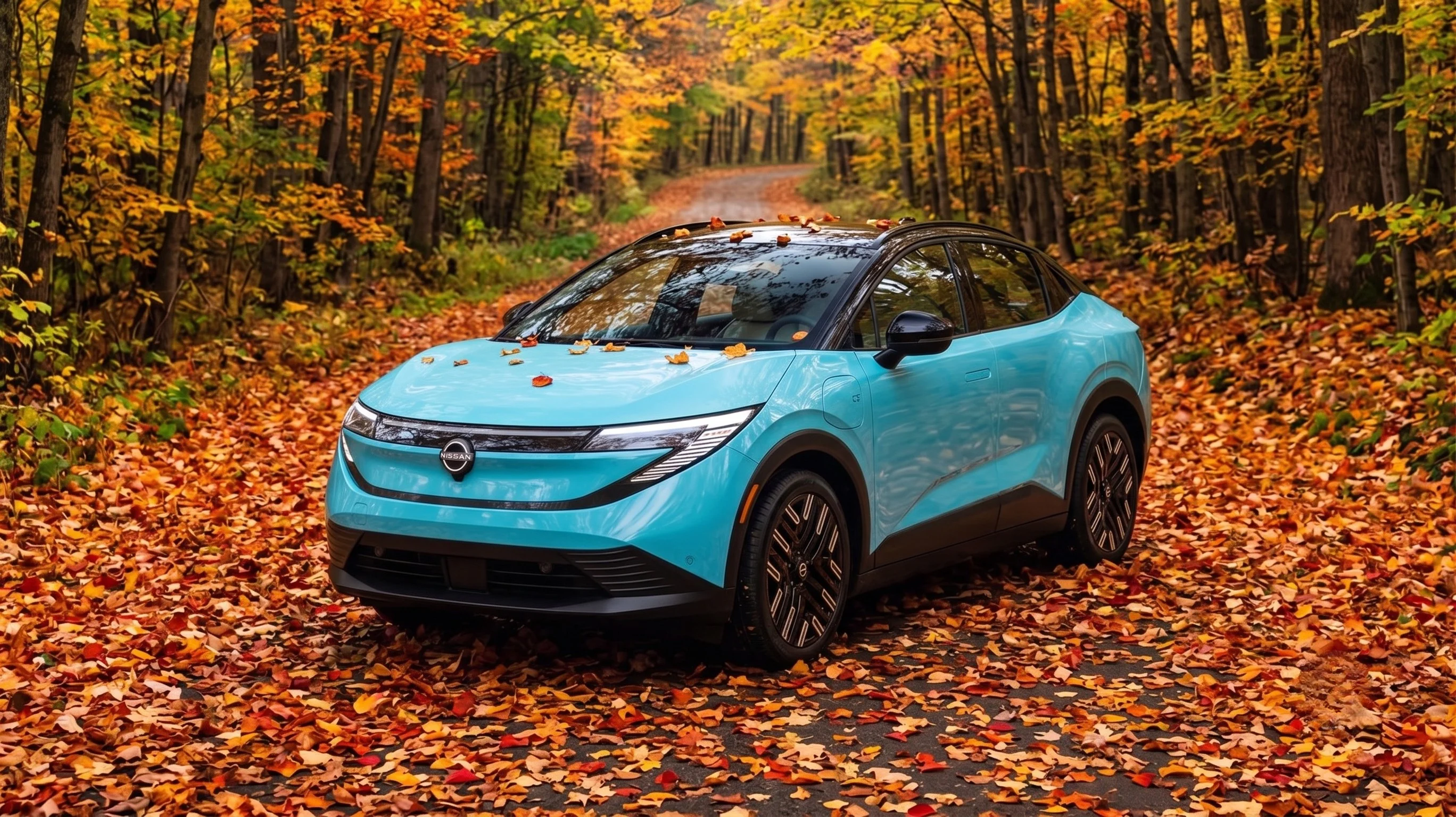
The third-generation Nissan LEAF is a major evolution of this pioneering EV. It trades the classic hatchback silhouette for a modern crossover body. One of the first questions we hear in our Ontario showroom is simple: how far does the LEAF travel on a single charge? For 2026, Nissan’s upgraded battery makes daily commuting and weekend getaways far less stressful.
The 2026 LEAF S+, SV+, and Platinum+ trims each use a 75-kWh liquid-cooled lithium-ion battery pack. It drives a front-wheel-drive electric motor that produces 214 horsepower and 261 lb-ft of torque. On the entry S+ trim, that returns an EPA-Estimated driving range of up to 303 miles — a major leap over earlier LEAF generations. Because these three “+” trims share the same 75-kWh pack, range varies mainly by trim weight and equipment rather than battery size. A separate base S trim is offered with a smaller 52-kWh battery pack and a lower-output motor.
2026 Nissan LEAF Range & EPA-Estimated Efficiency by Trim
| Trim | Battery | EPA-Estimated Range | EPA-Estimated City MPGe | EPA-Estimated Highway MPGe |
|---|---|---|---|---|
| S+ | 75-kWh | up to 303 miles | 131 | 111 |
| SV+ | 75-kWh | up to 288 miles | 123 | 105 |
| Platinum+ | 75-kWh | up to 259 miles | 110 | 96 |
Range and efficiency figures above are EPA-Estimated (source: fueleconomy.gov).
Want to see this blend of efficiency and crossover styling in person? You can explore the current 2026 LEAF lineup online, or call our sales team at (909) 740-6712.
EPA-estimated fuel economy figures are for comparison purposes only. Your actual mileage will vary depending on driving conditions, how you drive and maintain your vehicle, battery age/condition, and other factors.
How Highway Driving and Real-World Commutes Affect Your LEAF Range
Official EPA estimates are a great benchmark, but real-world conditions change how much energy you use. Highway driving is a good example. At higher speeds along Interstate 10 through Montclair, aerodynamic drag rises sharply, so the motor works harder to hold speed. And because EVs don’t use multi-speed transmissions, sustained high-speed travel usually uses more energy per mile than stop-and-go city driving.
In town, the LEAF frequently uses regenerative braking. It captures energy during deceleration and feeds it back into the 75-kWh battery. On the highway, there are fewer chances to regenerate, so real-world range can dip slightly below the EPA-Estimated maximum. Want to stretch range on a longer trip? The LEAF’s selectable Drive Modes and available ProPILOT Assist — which includes adaptive cruise control — help keep power delivery smooth and steady.
Charging Times: From Level 1 to Level 2 and DC Fast Charging
How long charging takes depends on the power source. Nissan includes a portable charge cable that works with both 120V and 240V outlets. The 2026 LEAF also has two separate charge ports. A J1772 port on the driver’s side handles AC (Level 1 and Level 2) charging, and a native NACS port on the passenger side handles DC fast charging. You can review the full charging details on Nissan’s LEAF page.
| Charging Method | Power Source | Approximate Charge Time | Best For |
|---|---|---|---|
| Level 1 | 120V household outlet | Well over a day for a full charge | Overnight top-ups when no other option is nearby |
| Level 2 | 240V home or public station | Roughly 7–12 hours (varies by amperage) | Daily home charging — plug in overnight |
| DC Fast Charging | Public Level 3 (NACS) | About 35 minutes for 10–80% at up to 150 kW | Quick stops on longer trips |
Through the native NACS port, the LEAF can plug directly into the Tesla Supercharger network without an adapter, plus other NACS-compatible stations. If you ever need to use a CCS fast charger, a Nissan-approved CCS adapter is available. Curious whether an EV fits your routine? You can learn more about going electric with our team.
Nissan LEAF Battery Warranty and Long-Term Capacity Protection
Long-term battery health is a common concern for new EV drivers. Nissan covers the LEAF’s lithium-ion battery with a limited warranty of 8 years or 100,000 miles (whichever comes first) against defects in materials and workmanship.
That coverage also protects against excessive capacity loss. If the battery’s capacity gauge drops below 9 of its 12 bars within the 8-year/100,000-mile window, Nissan will repair or replace the pack under the warranty’s terms. The LEAF’s liquid-cooled pack also uses an active thermal management system. It regulates battery temperature during fast charging and hot weather, helping preserve capacity over time.
This information is provided for general educational purposes only and does not constitute legal advice. Warranty coverage depends on the specific terms of your vehicle’s warranty agreement. Consult your owner’s manual or a qualified legal professional for guidance on your individual situation.
Does the LEAF Cost Less to Maintain Than a Gas-Powered Vehicle?
EVs offer a real advantage in routine upkeep. With no internal combustion engine, there are no spark plugs, timing belts, oxygen sensors, or exhaust systems — and no oil changes. Over time, that simpler design generally means lower maintenance costs than a comparable gas vehicle. Your main tasks are rotating tires, replacing the cabin air filter, and topping off windshield washer fluid. Brake pads also tend to last longer, since regenerative braking uses the motor to slow the car and reduces wear on the friction brakes.
The information in this article is general guidance and does not constitute a specific diagnostic or repair recommendation for any individual vehicle. Repair and maintenance decisions should be made in consultation with a certified technician based on the specific condition of your vehicle.
Common Questions About Owning and Driving a Nissan LEAF
Does the 2026 Nissan LEAF have a reliable motor and transmission?
Yes. Like all EVs, the LEAF uses a single-speed transmission paired with an electric motor. With far fewer moving parts than a gas powertrain, it’s engineered for smooth, quiet performance with minimal maintenance over the life of the vehicle.
Is the 2026 Nissan LEAF eligible for federal EV tax credits?
Federal clean-vehicle tax credits under IRC §30D were terminated for vehicles acquired after September 30, 2025, under the One Big Beautiful Bill Act. The main exception is if you took possession under a written binding contract with payment made on or before that date. Our team can help you check for any active state or local utility rebates that may apply.
How does hot Southern California weather affect the battery?
High temperatures can stress any EV battery, but the LEAF’s active thermal management system is designed to regulate battery temperature. That protection helps maintain charging performance and preserve long-term capacity, even on hot summer drives through Fontana.
What safety features come standard?
Every 2026 LEAF comes standard with Nissan Safety Shield 360, a suite that includes automatic emergency braking with pedestrian detection, blind spot warning, and lane departure warning, among other driver-assist technologies. These systems assist the driver but cannot prevent all collisions — see your owner’s manual for details.
Driver-assist and safety systems are supplemental aids and are not a substitute for safe, attentive driving. Their effectiveness depends on weather, road, and traffic conditions and other factors. Always obey traffic laws and stay attentive to the road. See your owner’s manual for system details and limitations.
Can I charge my LEAF in the rain?
Yes. EV charging ports, connectors, and home charging equipment are designed to handle wet conditions safely, and built-in protocols prevent current from flowing until a secure connection is established.
Find Your All-Electric Nissan LEAF at Empire Nissan
Going electric is an exciting step, and our team is here to make it straightforward. The redesigned crossover body, expanded range, and advanced charging of the third-generation LEAF make it a strong value for local commuters and families alike. Our sales specialists can answer your questions, walk you through home charging, and help you find the right trim. When you’re ready for a test drive, visit our Ontario showroom — or call (909) 740-6712.
Disclosures
EPA-estimated fuel economy figures are for comparison purposes only. Your actual mileage will vary depending on driving conditions, how you drive and maintain your vehicle, battery age/condition, and other factors.
Driver-assist and safety systems are supplemental aids and are not a substitute for safe, attentive driving. Their effectiveness depends on weather, road, and traffic conditions and other factors. Always obey traffic laws and stay attentive to the road. See your owner’s manual for system details and limitations.
This information is provided for general educational purposes only and does not constitute legal advice. Warranty coverage depends on the specific terms of your vehicle’s warranty agreement. Consult your owner’s manual or a qualified legal professional for guidance on your individual situation.
The information in this article is general guidance and does not constitute a specific diagnostic or repair recommendation for any individual vehicle. Repair and maintenance decisions should be made in consultation with a certified technician based on the specific condition of your vehicle.